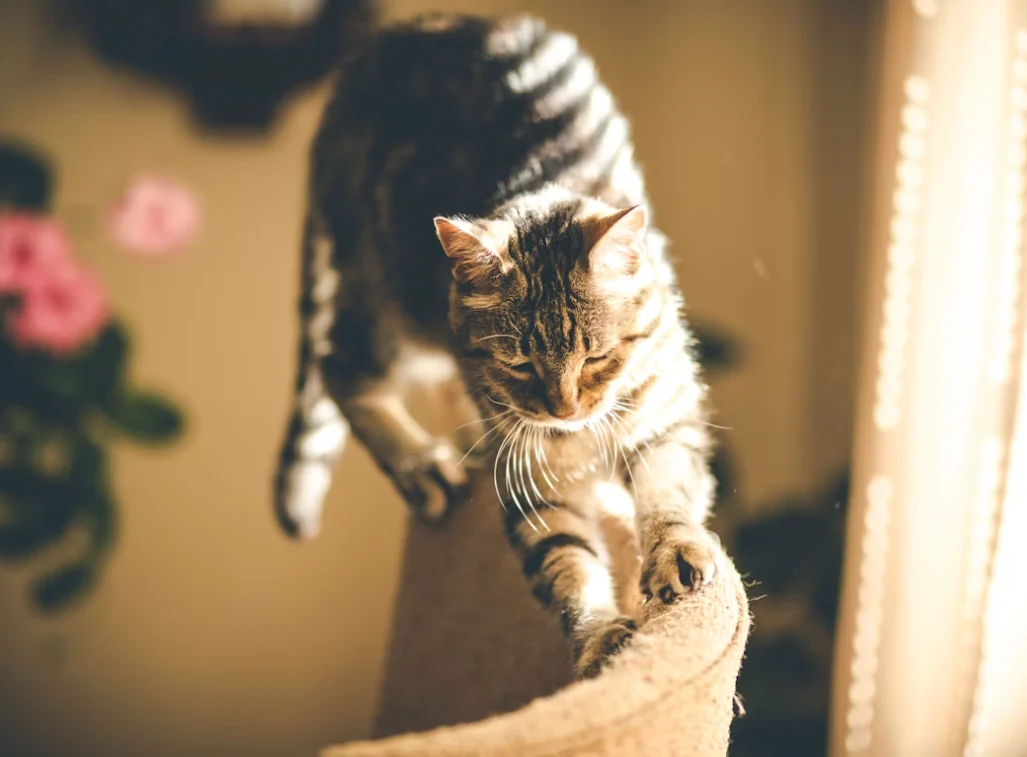
Overactive Indoor Cats – Create Better Daily Play Routines
Overactive indoor cats often need better outlets for hunting, climbing, chasing, and exploring rather than endless attempts to make them “calm down.” A structured daily play routine can help channel bursts of energy into appropriate activity. The strongest routines combine short interactive sessions with independent enrichment instead of relying on one long play period.
Understand Why Indoor Energy Builds Up
Cats may spend much of the day resting and then become intensely active during predictable periods. Indoor life removes many of the natural activities that would otherwise occupy them, including stalking prey, patrolling territory, climbing, and investigating changing surroundings.
A cat that races through rooms, attacks moving feet, or repeatedly demands interaction may simply have more energy than its environment is absorbing. Temperament and age matter too; some cats naturally require more activity than others.
People encounter plenty of general lifestyle reading online, but your cat’s repeated behavior patterns are usually more useful than any single generic schedule. Notice when the energetic periods happen and plan play shortly before them.
Use Short Interactive Play Sessions
Interactive toys allow you to imitate the movement of prey while keeping your hands away from claws and teeth. Wand toys, lightweight balls, and toys that change direction can create more engaging movement than simply leaving objects on the floor.
Try several short sessions rather than expecting one marathon workout to solve the problem. Stop while the cat is still interested, then bring the activity back later.
Let the Cat Complete the Chase
Constantly keeping a toy out of reach can become frustrating. Allow occasional catches so the sequence includes stalking, chasing, pouncing, and capturing.
Ending an active session with a normal meal or small portion of the cat’s usual food may also create a natural transition from activity toward settling.
| Activity | What It Encourages | Best Use |
|---|---|---|
| Wand play | Chasing and pouncing | Supervised sessions |
| Puzzle feeder | Problem solving | Independent activity |
| Cat tree | Climbing and observing | Daily environment |
| Ball or toy mouse | Short bursts of pursuit | Solo play |
Make the Home More Interesting Between Sessions
A cat can’t depend on you for entertainment every waking hour. Window perches, climbing furniture, cardboard boxes, scratching surfaces, tunnels, and rotating toys can make the environment more rewarding.
Ideas gathered through broader online reading can help inspire variety, but avoid filling every room with toys at once. Items often become interesting again after disappearing for several days.
Vertical space deserves particular attention. A tall cat tree or secure shelving can increase usable territory without requiring a larger home.
Match Play to the Cat’s Peak Energy Times
Random play is helpful, but predictable timing can work better for cats with clear activity cycles. If late-evening zoomies happen almost every night, schedule a focused play session before that normal burst begins.
Morning activity can also help cats that wake their owners early. Rather than rewarding persistent 4 a.m. attention with immediate play or feeding, shift satisfying activity toward a routine that fits the household.
Some owners find ideas through digital inspiration sources, pet communities, and product pages. Use those ideas selectively. Your cat’s response determines whether an activity is useful.
Mistakes That Can Increase Restlessness
Using hands as toys is a frequent problem. A kitten grabbing fingers may appear harmless, but the habit becomes much less pleasant when the animal is larger and stronger.
Another mistake is expecting toys left permanently on the floor to remain exciting. Novelty matters. Rotation, movement, hiding places, and interaction often make ordinary toys more interesting without requiring constant purchases.
Don’t assume every intense behavior is caused by excess energy either. Sudden or unusual behavior changes deserve closer attention, particularly if eating, drinking, grooming, litter-box use, or mobility also changes.
Frequently Asked Questions
How many times a day should I play with an indoor cat?
Several brief sessions can be easier to maintain than one long session. The useful amount varies with age, personality, health, environment, and how much independent activity the cat gets.
Why does my cat become hyper at night?
Cats often become active around dawn and dusk, and an indoor cat may carry unused energy into the evening. Earlier interactive play and environmental enrichment can help redirect some of that activity.
Do puzzle feeders help active indoor cats?
They can. Puzzle feeders add movement and problem solving to something the cat already values—food. Introduce them at an easy level so the cat learns how the puzzle works without unnecessary frustration.
Build a Routine the Cat Can Expect
A better play routine doesn’t require entertaining your cat all day. Give energetic behavior predictable outlets through interactive play, climbing opportunities, rotating toys, and independent challenges. Watch which activities hold attention rather than continually buying new products. Once the environment offers meaningful things to chase, investigate, scratch, and climb, indoor energy becomes much easier to live with.