Destructive Puppy Chewing – Redirect Behavior With Better Training
Destructive puppy chewing usually improves when owners manage access, provide suitable chew options, and reward the behavior they want instead. Puppies explore with their mouths, and chewing can become especially intense during teething, boredom, or periods without enough appropriate activity. Training works better when temptation is controlled rather than constantly tested.
Make the Environment Easier to Manage
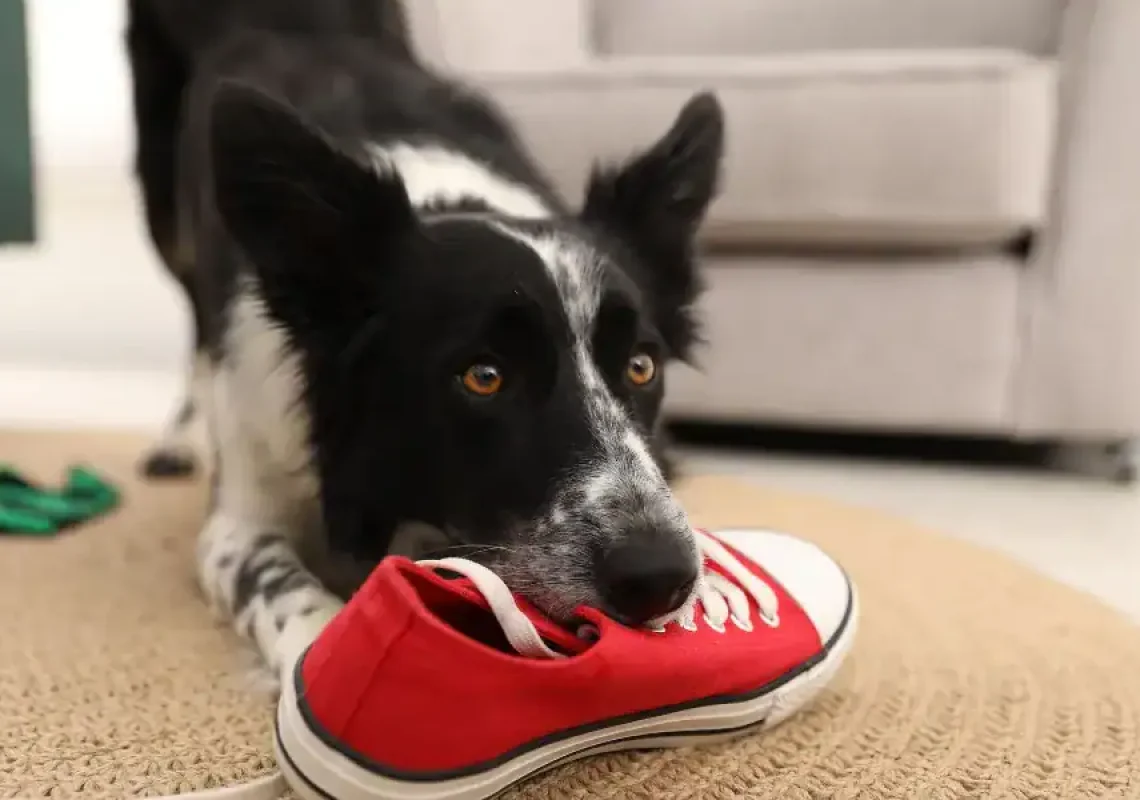
Start by removing valuable or dangerous objects from puppy level. Shoes, charging cables, children’s toys, remote controls, houseplants, and loose household items shouldn’t become daily training exercises if they can simply be stored safely.
Use gates, closed doors, a puppy-safe room, or supervised confinement to control access. Management isn’t avoiding training; it prevents the puppy from repeatedly practicing destructive chewing.
| Problem | Practical Response | Goal |
|---|---|---|
| Chewing shoes | Store shoes away | Remove temptation |
| Biting furniture | Redirect to chew toy | Teach an alternative |
| Chewing when alone | Puppy-proof the area | Prevent repetition |
| Ignoring toys | Rotate chew choices | Maintain interest |
Redirect Instead of Turning Chewing Into a Chase
If you catch the puppy chewing something inappropriate, calmly interrupt and offer an acceptable item. When the puppy switches, praise or reward that decision so the replacement behavior becomes worthwhile.
Pet owners searching for ideas often move between trainers, forums, videos, and general lifestyle coverage. The useful principle is simple: make the correct behavior easier to perform and more rewarding than the unwanted one.
Choose Chews the Puppy Actually Likes
One puppy may enjoy flexible rubber toys while another prefers a different texture. Rotate several suitable options rather than leaving a pile of identical toys on the floor permanently.
Always choose items appropriate for your puppy’s size and chewing strength. Remove damaged objects that are breaking apart or creating pieces the puppy could swallow.
Look at What Happens Before the Chewing
Destructive chewing often has a pattern. Perhaps it happens after the puppy wakes, when everyone becomes busy, or during the evening when unused energy peaks.
Tracking those moments can be more useful than repeatedly correcting the puppy afterward. General animal and household reading may introduce different training ideas, but observing your own puppy’s routine tells you where prevention will have the biggest effect.
Short training sessions, play, sniffing activities, and age-appropriate exercise can make settling easier. Mental engagement matters because a puppy with nothing suitable to do will often invent an activity.
Teach Household Rules Gradually
Freedom should expand as reliable behavior develops. Giving a young puppy unrestricted access to an entire home before good habits exist creates dozens of opportunities to make the wrong choice.
You may see everyday pet-related articles suggesting different solutions, but consistency inside the household matters more than constantly changing tactics. Everyone should respond similarly and keep restricted objects out of reach.
Reward Calm Choices Too
Don’t reserve attention only for bad behavior. If your puppy settles with an appropriate chew independently, quietly reinforce that choice with praise, attention, or another suitable reward.
Training Mistakes That Keep Chewing Going
Chasing a puppy after it steals an object can accidentally turn theft into a game. Harsh punishment can also create confusion, especially when correction happens long after the chewing occurred.
Another mistake is expecting toys alone to solve the problem. Toys help, but supervision, sleep, activity, access control, and consistent redirection work together. A puppy repeatedly reaching the same furniture leg is practicing the habit every time it happens.
Pay Attention to Dangerous Chewing
Take chewing seriously when a puppy is swallowing pieces of objects, targeting electrical cords, breaking teeth, consuming toxic materials, or showing signs of illness after swallowing something questionable. Contact a veterinarian promptly when ingestion could be dangerous.
Chewing that becomes unusually intense, compulsive, or accompanied by other behavioral or physical changes also deserves professional attention. A veterinarian can help rule out health issues before the behavior is treated solely as a training problem.
Frequently Asked Questions
When do puppies usually stop chewing everything?
Chewing often becomes easier as puppies mature and finish teething, but there isn’t one exact age when it disappears. Training, environment, breed tendencies, activity level, and individual behavior all affect how long destructive chewing continues.
Should I punish my puppy for chewing furniture?
Punishment after the event doesn’t clearly teach the desired alternative. Prevent access, interrupt inappropriate chewing when you see it, redirect the puppy to an acceptable item, and reinforce the replacement behavior instead.
Why does my puppy chew more when left alone?
Lack of supervision gives the puppy more opportunity, while boredom or difficulty settling may increase chewing. Prepare a safe environment before leaving and provide appropriate activities rather than expecting a young puppy to understand household boundaries automatically.
Build the Habit You Want to Keep
The goal isn’t to stop a puppy from ever chewing. It’s to teach which things are safe to chew while preventing repeated practice on furniture, shoes, cords, and other household belongings.
Manage the environment first, redirect consistently, and reward good choices before destructive chewing becomes deeply practiced. Good puppy training often looks less like constant correction and more like preventing predictable mistakes.