Truck Accident Cases – Preserve Evidence Before Vehicles Change
Truck accident cases can involve evidence that changes quickly. Vehicles may be repaired, cargo may be moved, roadway conditions may disappear, and electronic or company records may be retained for different periods.
Early organization therefore matters. The goal is not to decide fault immediately, but to preserve reliable information before later investigation becomes harder.
Start With What Exists at the Crash Scene
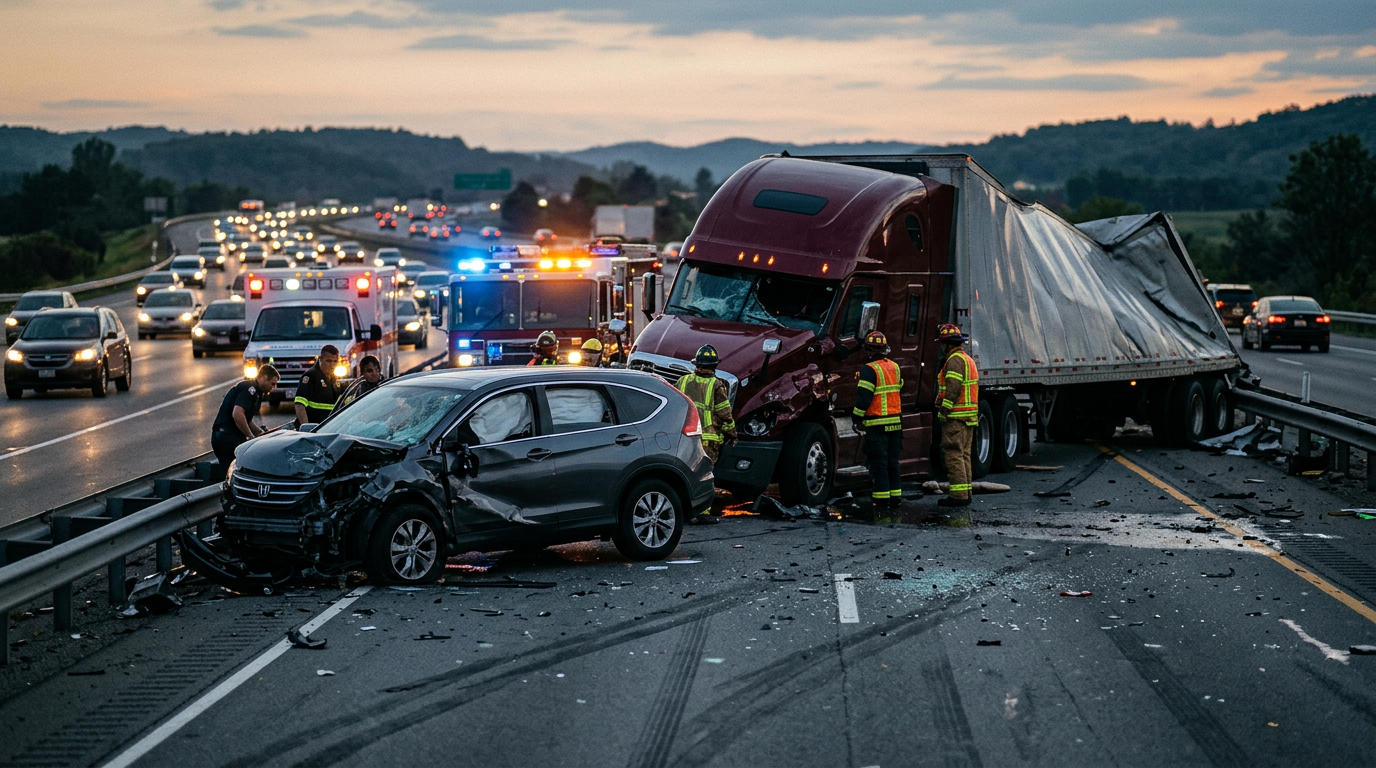
Photographs can document vehicle positions, impact points, debris, tire marks, road signs, weather conditions, and visible cargo. Police report information, witness contacts, and towing details are also worth preserving.
NHTSA explains through its Crash Investigation Sampling System that detailed crash investigations may examine scene evidence, police reports, vehicle damage, medical information, and other records.
Personal files should remain organized separately. General accident claim reading may help with terminology, but actual evidence from the crash should remain the priority.
Track Every Vehicle and Responsible Entity
A commercial truck crash may involve more than the driver. Depending on the facts and applicable law, records may relate to a carrier, vehicle owner, maintenance provider, trailer owner, shipper, broker, or another business.
Write down every company name visible on the tractor, trailer, paperwork, photographs, and police report. Broader legal publishing material can provide background reading while those names and documents are being organized.
Do not assume that lettering on the truck alone establishes who employed the driver or controlled every part of the trip.
| Evidence | Possible Source | Reason to Preserve It |
|---|---|---|
| Scene photos | Driver or witnesses | Captures temporary conditions |
| Police report | Law enforcement | Records crash details |
| Vehicle photos | Tow yard or scene | Shows physical damage |
| Medical documents | Treatment providers | Records injuries and care |
Preserve Communications and Medical Documentation
Save insurance letters, claim numbers, emails, recorded-message notices, repair estimates, medical bills, and appointment records. A dated folder or digital archive makes later review easier.
If unfamiliar legal terms appear in correspondence, online legal Q&A resources may help with general definitions. Questions about rights, deadlines, evidence preservation, or settlement language require advice based on the governing state’s law.
Physical symptoms can also evolve after a collision. Accurate medical records are more useful than trying to recreate treatment history from memory.
Where Truck Claims Commonly Become Complicated
A frequent mistake is treating a commercial-truck collision exactly like a simple two-car property-damage claim. The number of potentially relevant records and business relationships can be greater.
Another problem is delay. Vehicles may change condition after repair, businesses continue normal record-management practices, and witnesses become harder to contact. Preservation does not prove negligence, but it reduces avoidable gaps in the factual record.
When to Seek Legal Help Promptly
Consider timely professional guidance when injuries are substantial, multiple companies are involved, responsibility is disputed, a commercial insurer requests extensive statements, or evidence may be difficult to preserve.
Filing deadlines are controlled largely by state law and can vary with the type of claim and parties involved. A local attorney can determine which deadlines and preservation procedures apply to a particular case.
Frequently Asked Questions
What should be saved after a truck accident?
Keep photographs, police information, witness details, medical records, towing information, insurance correspondence, repair documents, and any photographs showing company names or identifying numbers on the truck or trailer.
Can truck data become relevant after a crash?
Potentially. Depending on the vehicle, investigation, applicable rules, and legal process, electronic records or company documents may become relevant. Availability and access should not be assumed without case-specific investigation.
Is the truck driver always the only possible defendant?
No. The legal relationships surrounding a commercial vehicle can involve several people or businesses. Whether any additional party has responsibility depends on the facts and the law governing the collision.
Protect the Record Before Conditions Change
A commercial vehicle will not remain frozen in the condition it was in immediately after a collision. Neither will the roadway, witness memories, or business records.
Preserve what you can, maintain a dated file, and obtain jurisdiction-specific legal advice when injuries, disputed responsibility, or disappearing evidence make the situation more complicated.
This article provides general legal information and is not a substitute for advice from a qualified attorney.