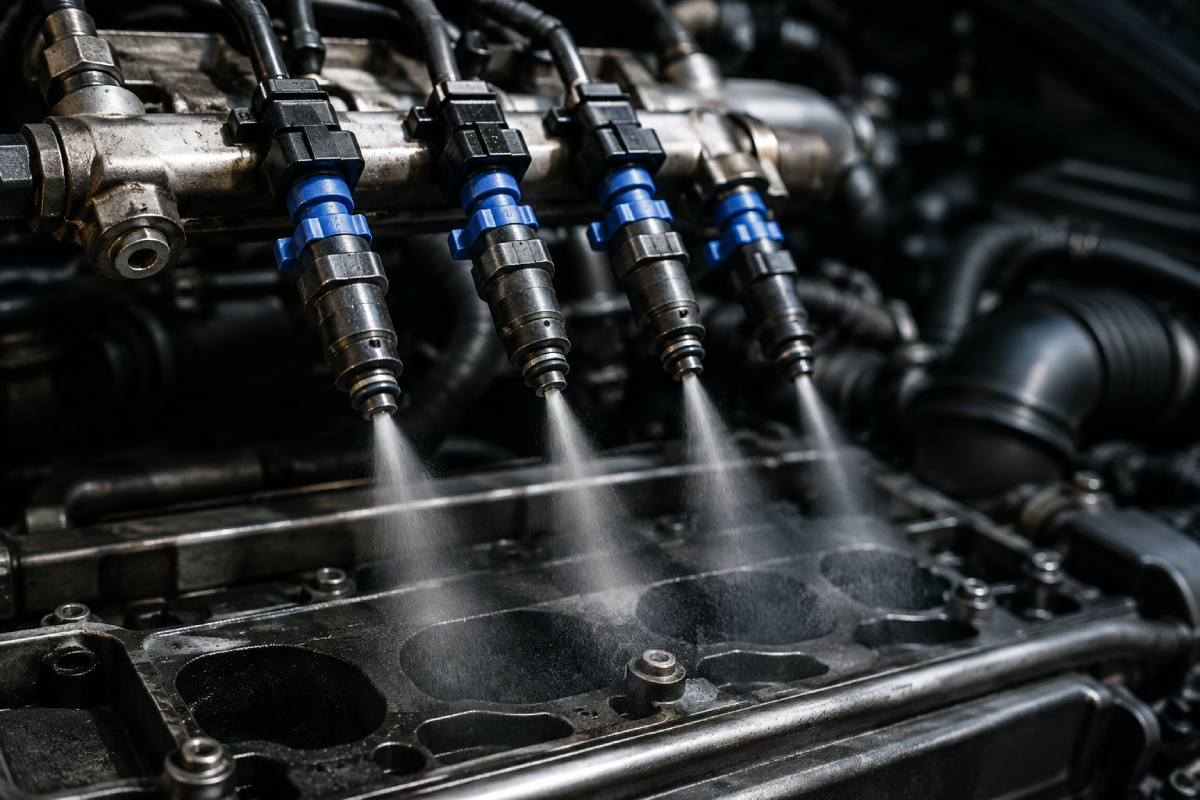
Dirty Fuel Injectors – Restore Efficiency With Proper Cleaning
Fuel injectors are designed to deliver carefully controlled amounts of fuel into an engine. When deposits interfere with that spray pattern, combustion may become less consistent. Dirty fuel injectors can contribute to rough running, hesitation, poor acceleration, or reduced fuel economy, although those symptoms can also come from many other engine problems.
What Happens When Injectors Become Dirty?
Injectors contain extremely small openings that meter and atomize fuel. Deposits around those openings can disturb the spray pattern or reduce effective fuel delivery.
The change may be subtle at first. Drivers following routine engine care should remember that injector condition is only one part of a larger fuel and ignition system that also includes pumps, filters, sensors, spark plugs, and engine controls.
Deposits Can Affect Combustion
Engines depend on the correct mixture of air and fuel. An injector that isn’t delivering fuel properly can contribute to uneven combustion in one or more cylinders.
That may show up as rough idle, hesitation, or reduced performance. But those symptoms don’t prove the injector itself is dirty.
Signs That Deserve Further Diagnosis
Poor fuel economy is commonly blamed on injectors, yet tire pressure, driving style, sensor faults, ignition problems, and mechanical wear can produce similar results. Diagnosis should come before cleaning.
A rough idle or occasional stumble also deserves context. Looking through broader car efficiency topics may help drivers understand maintenance relationships, but actual troubleshooting should rely on vehicle-specific testing.
| Driving Symptom | Possible Connection | Other Possibilities |
|---|---|---|
| Rough idle | Uneven fuel delivery | Ignition or vacuum fault |
| Hesitation | Restricted injector flow | Sensor or fuel-pressure issue |
| Poor economy | Weak spray pattern | Tires, driving habits, sensors |
| Misfire | Injector problem possible | Plug, coil, compression issue |
Cleaning Options Depend on the Problem
Some deposits may respond to a suitable fuel-system cleaner used according to product and vehicle instructions. More serious injector problems can require professional cleaning, flow testing, or replacement.
Cleaning also can’t repair an injector with an electrical fault, damaged internal component, or significant mechanical wear. Information about engine performance care can provide useful background, but testing is what separates a deposit problem from a failed part.
Professional Testing Can Prevent Guesswork
A technician may examine diagnostic trouble codes, fuel trims, fuel pressure, ignition condition, and cylinder performance before blaming the injectors. Depending on the vehicle, injector electrical operation or flow may also be tested.
This approach matters because replacing or aggressively cleaning good injectors doesn’t solve a problem elsewhere.
Where Injector Cleaning Goes Wrong
One mistake is treating injector cleaner as a cure for every rough-running engine. If a failing ignition coil, vacuum leak, weak fuel pump, or compression problem is responsible, cleaning the injectors won’t correct it.
Using excessive additives is another poor strategy. More chemical doesn’t automatically mean more cleaning, and products should be used only as directed. Preventive maintenance works best when it follows actual system needs rather than repeated guesswork.
Protect the Fuel System Going Forward
Use fuel that meets the manufacturer’s recommended grade, replace serviceable fuel filters as required, and investigate warning lights or persistent performance changes instead of ignoring them.
Consistent maintenance can reduce the chances of deposits becoming severe. It also makes troubleshooting easier because fewer neglected systems are competing as possible causes.
Frequently Asked Questions
Can dirty fuel injectors cause poor gas mileage?
They can contribute if deposits disturb fuel delivery, but fuel economy can also decline because of driving conditions, tire pressure, sensors, ignition faults, or mechanical issues.
Will fuel injector cleaner fix a misfire?
Sometimes deposits may improve, but a misfire has many possible causes. Diagnostic testing should identify whether fuel delivery, ignition, compression, or another system is responsible.
Do fuel injectors always need replacement when clogged?
No. Some may respond to appropriate cleaning, while damaged or electrically faulty injectors may need replacement. The right choice depends on testing and injector condition.
Diagnose Before You Clean
Dirty fuel injectors can reduce smoothness and efficiency, but similar symptoms come from many other faults. Start with proper diagnosis, then choose cleaning or replacement only when the evidence points toward the injectors. That simple order prevents wasted repairs and gives the engine a better chance of returning to consistent performance.