Overfed House Cats: Manage Portions and Increase Activity
Indoor cats can gain excess weight quietly because extra calories accumulate faster than many owners expect. Managing an overfed house cat usually involves controlled portions, appropriate food, more opportunities for movement, and veterinary guidance when weight loss is needed.
Sudden food restriction isn’t the answer. Cats need a gradual, appropriate plan that protects nutrition while helping them reach a healthier body condition.
Look at Portions Before Blaming the Food
A food can be nutritionally appropriate while still being served in excessive amounts. Feeding directions on packaging are starting points, and individual needs vary according to size, age, activity, health, and whether a cat has been spayed or neutered.
Owners exploring everyday pet-care reading may see many feeding opinions. The safest portion decision for an overweight cat should still be based on the cat’s individual condition and professional veterinary advice.
Count Treats and Extras Too
Treats, table scraps, and small food additions can quietly increase daily intake. Everyone in the household should know who feeds the cat so meals aren’t accidentally duplicated.
Turn Feeding Into a Routine
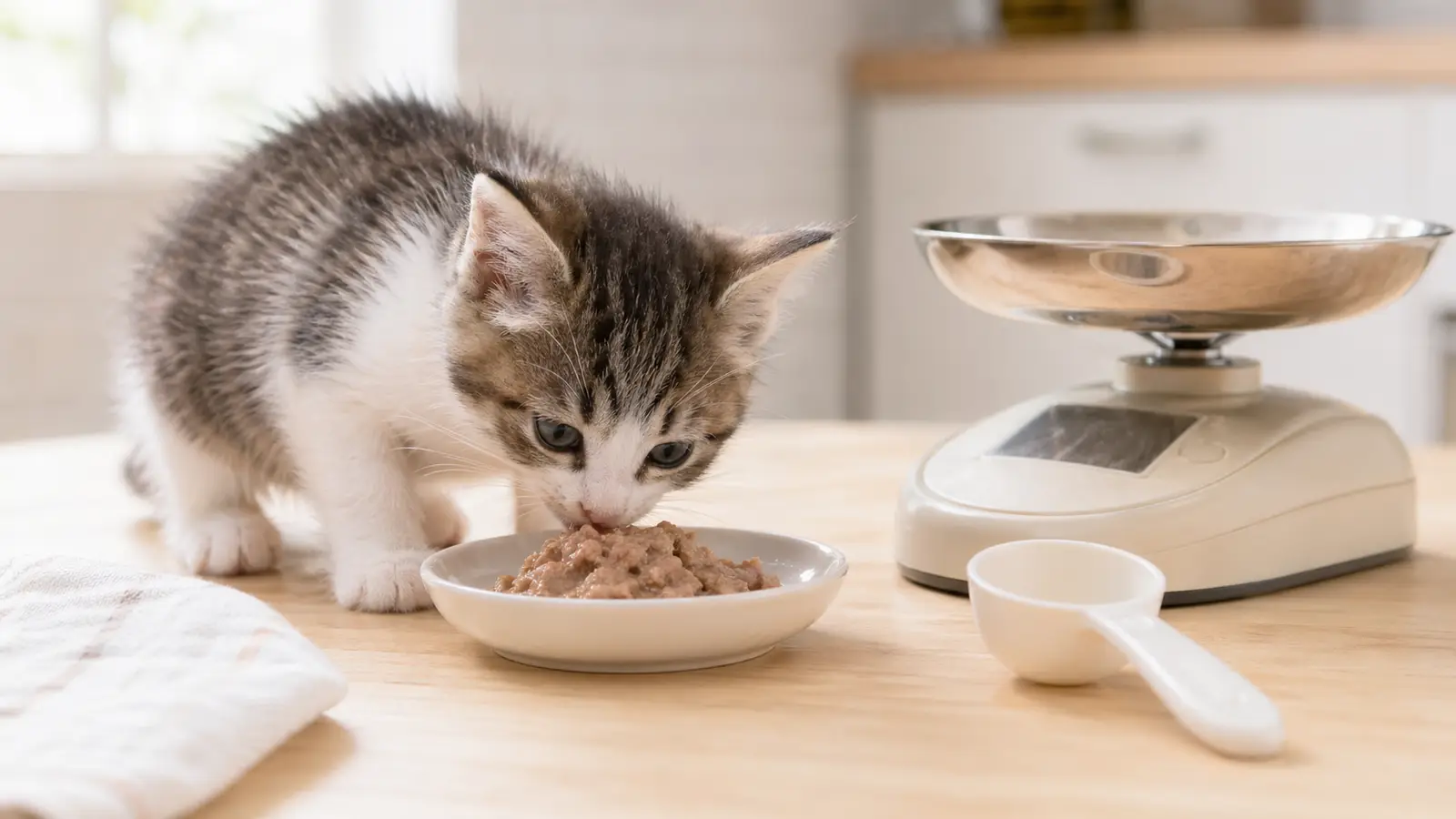
Measured meals make intake easier to track than repeatedly topping up a bowl. A consistent schedule also helps owners notice changes in appetite that could otherwise disappear when food remains available all day.
General routine pet information can offer organizational ideas, but portion control works best when one person keeps a simple record of meals and treats.
| Habit | Possible Problem | Better Direction |
|---|---|---|
| Constantly full bowl | Intake is hard to track | Measure planned meals |
| Frequent treats | Hidden extra calories | Set a daily treat limit |
| Little active play | Low energy expenditure | Add short play sessions |
| Sudden food cuts | May be unsafe | Use veterinary guidance |
Increase Activity Without Forcing Exercise
Cats don’t need a human-style workout program. Short hunting-style play sessions with wand toys, rolling toys, climbing areas, or food puzzles can encourage movement without making activity feel forced.
A cat that has been sedentary may initially participate for only a few minutes. Build activity gradually and pay attention to breathing, mobility, interest, and signs of discomfort.
People browsing pet-owner reading may find countless enrichment suggestions. Choose activities that match the individual cat rather than expecting every cat to chase, jump, or climb in the same way.
Where Weight-Loss Efforts Can Go Wrong
Drastically reducing food because a cat looks overweight can create problems of its own. Weight management should protect adequate nutrition while producing gradual change.
Visual appearance can also mislead. Coat length and body shape make some cats look larger or smaller than they actually are, which is why body-condition assessment is more useful than guessing from photographs or weight alone.
Cornell’s Feline Health Center advises owners to work with a veterinarian when determining ideal body weight and adjusting diet for an overweight cat. Cornell guidance on feeding cats
When Should a Veterinarian Be Involved?
Arrange veterinary advice before starting a significant weight-loss plan, particularly if the cat is markedly overweight, older, taking medication, or living with another health condition.
Prompt veterinary attention is also appropriate if a cat suddenly stops eating, loses weight unexpectedly, becomes unusually weak, vomits repeatedly, has difficulty breathing, or develops a major change in thirst, urination, or activity. A weight problem shouldn’t be assumed to explain every new symptom.
Frequently Asked Questions
Should I leave dry food out all day for my cat?
Some cats regulate their intake adequately, while others overeat when food is constantly available. Measured meals can make portions easier to monitor when excess weight is a concern.
Can playing with my cat help with weight management?
Regular active play can increase movement and provide useful enrichment. Food portions still matter, so activity is normally one part of a broader weight-management plan.
How quickly should an overweight cat lose weight?
Safe weight-loss speed depends on the individual cat. Because overly aggressive restriction can be harmful, a veterinarian should determine an appropriate target and feeding approach.
Build Better Habits Gradually
Successful feline weight management is mostly about consistency. Measure food, account for treats, introduce more movement, and watch how the cat responds over time.
Avoid turning the process into a crash diet. If your cat needs meaningful weight reduction, use veterinary guidance to establish an appropriate body-condition goal and feeding plan that supports health as well as weight control.
This article is for general pet-care information and is not a substitute for professional veterinary advice.