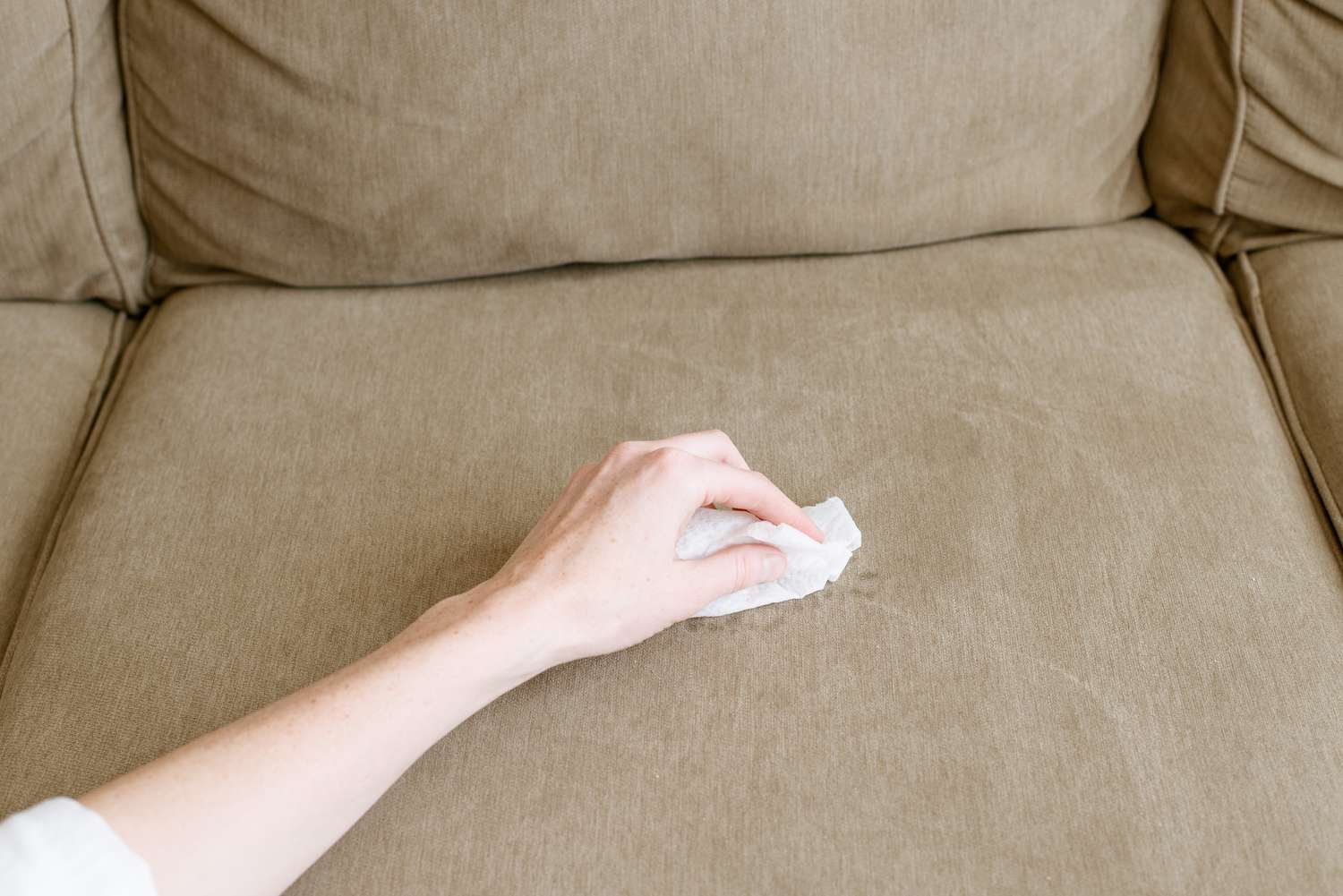
Stained Sofa Fabric: Lift Marks Without Spreading Damage
Cleaning stained sofa fabric requires more restraint than scrubbing power. The safest approach is to identify the upholstery material, remove loose debris, test your cleaner in a hidden area, and blot the stain gradually. Aggressive rubbing can enlarge the mark, distort fibers, or push moisture deeper into the cushion.
Check the Upholstery Before Adding Cleaner
Start by looking for the manufacturer’s care label or cleaning code. Different upholstery fabrics tolerate different amounts of water, solvents, or professional cleaning.
Even attractive sofas featured in room design collections can use fabrics with very different maintenance requirements. Never assume a cleaning method is safe because two sofas look similar.
Test a Hidden Spot First
Apply a small amount of the intended cleaner to an inconspicuous area. Let it dry before deciding whether the fabric has changed color, texture, or finish.
Testing matters especially on dark, delicate, vintage, or unknown upholstery. If color transfers heavily onto a white cloth, stop before treating the visible stain.
Blot the Stain Instead of Scrubbing
If the spill is fresh, absorb as much liquid as possible using a clean white cloth or plain paper towel. Press gently and lift rather than rubbing from side to side.
Cleaning discussions within decor and furnishing resources may cover many household surfaces, but upholstery demands controlled moisture. Work from the outside edge of the stain toward the center to reduce spreading.
| Stain Situation | Avoid | Better Move |
|---|---|---|
| Fresh liquid | Hard rubbing | Blot repeatedly |
| Dried residue | Soaking immediately | Lift loose material first |
| Unknown fabric | Strong cleaner | Test discreetly |
| Large stain | Excess water | Work in small areas |
Use as Little Moisture as Necessary
Oversaturating upholstery can create rings, extend the stain, or leave the cushion damp for a long period. Apply cleaner to the cloth when possible instead of pouring it directly onto the sofa.
Ideas from household style guides can help with maintaining living spaces, but stain removal should always follow the sofa’s own care requirements. Several light treatments are often safer than one heavy application.
Give the Fabric Time to Dry
After treatment, allow the sofa to dry naturally with good airflow. Avoid sitting on the damp area or covering it with blankets.
A fan positioned nearby may improve air movement, but avoid excessive heat unless the upholstery manufacturer specifically permits it.
Handle Dried Marks Carefully
For dried food or other solid residue, gently lift loose material with a spoon or similarly dull edge before using liquid cleaner. This prevents unnecessary material from being rubbed deeper into the weave.
Vacuum remaining crumbs with an upholstery attachment. Only then begin controlled spot treatment suitable for the fabric.
Where Sofa Cleaning Often Goes Wrong
Using more cleaner because the first attempt didn’t immediately remove the mark can make things worse. Upholstery sometimes needs repeated blotting and drying rather than stronger chemicals.
Another mistake is mixing household cleaning products. Combining chemicals can damage fabric and may create harmful fumes. If the stain is large, old, heavily pigmented, or on delicate upholstery, professional cleaning may be safer than repeated experimentation.
Frequently Asked Questions
Can I use dish soap on sofa fabric?
Only if the upholstery care guidance allows water-based cleaning and the product is suitable for the fabric. Test a diluted solution in a hidden area before treating the visible stain.
Why did my sofa stain get bigger after cleaning?
Excess liquid can carry dissolved residue beyond the original mark, producing a larger ring. Heavy rubbing can also spread contamination across neighboring fibers.
Should I use hot water on upholstery stains?
Hot water isn’t automatically better and can affect some fibers, finishes, or stain types. Follow the manufacturer’s cleaning instructions rather than choosing temperature based on stain severity.
Protect the Fabric While Removing the Mark
Successful sofa cleaning means removing the stain without creating a second problem. Check the care instructions, test first, blot patiently, and limit moisture. If the fabric reacts badly or the mark continues spreading, stop treating it and consider a professional upholstery cleaner before permanent damage occurs.